

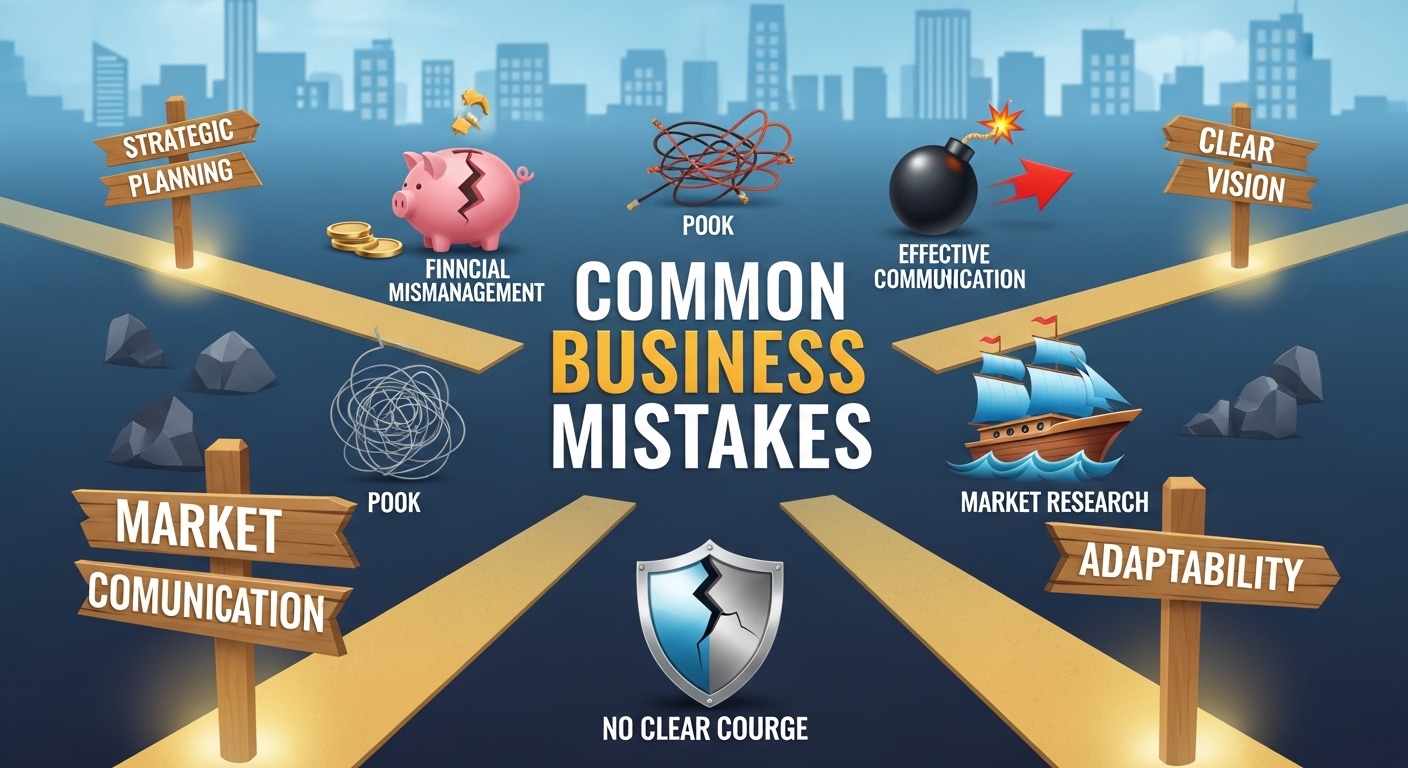
Modern businesses grow faster than ever in today’s competitive digital economy, but many entrepreneurs still fail due to avoidable mistakes. These mistakes often come from poor planning, weak market understanding, and lack of financial control. By identifying common errors early and applying smart strategies, businesses can improve stability, increase profitability, and build long term sustainable growth in any industry.
Poor Business Planning Strategy
Lack of Clear Business Vision
A lack of clear business vision often leads to confusion and weak decision making in business operations. Without a defined direction, teams struggle to set priorities and achieve goals. A strong vision helps guide strategy, improve focus, and align efforts toward long term success in competitive markets.
Weak Market Research Understanding
Weak market research understanding can cause businesses to target the wrong audience and waste resources. Proper research helps identify customer needs, market trends, and competition. With accurate insights, businesses can create better products, improve marketing strategies, and increase chances of success in the marketplace.
Ignoring Business Goals Setting
Ignoring business goals setting leads to unstructured growth and poor performance tracking. Clear goals help measure progress, improve accountability, and maintain focus. Businesses that set realistic short term and long term goals are more likely to stay organized and achieve consistent results.
Poor Strategic Decision Making
Poor strategic decision making can negatively impact business growth and profitability. Decisions based on assumptions instead of data often lead to losses. Effective strategies require careful analysis, planning, and evaluation of risks to ensure long term stability and success.
No Competitive Analysis
No competitive analysis results in businesses failing to understand their market position. Studying competitors helps identify strengths, weaknesses, and opportunities. It allows businesses to improve their services, pricing, and strategies to stay ahead in a competitive environment.
Financial Management Mistakes
Poor Budget Planning
Poor budget planning can lead to overspending and financial instability in business operations. A well structured budget helps control expenses, allocate resources efficiently, and ensure steady cash flow for long term sustainability.
Ignoring Cash Flow Management
Ignoring cash flow management often results in business failure despite high revenue. Proper cash flow tracking ensures that businesses can pay expenses on time and maintain financial health consistently.
Overinvestment in Early Stage
Overinvestment in the early stage of business can create financial pressure and risk of losses. Businesses should scale gradually based on performance and demand rather than spending excessively at the start.
Lack of Financial Tracking
Lack of financial tracking prevents businesses from understanding profits and losses clearly. Regular tracking improves decision making, identifies financial issues early, and ensures better control over business performance.
Poor Pricing Strategy
Poor pricing strategy can reduce competitiveness and profitability. Pricing should reflect market demand, production cost, and customer value perception to ensure sustainable business growth.
Marketing and Branding Errors
Weak Brand Identity
Weak brand identity makes it difficult for customers to recognize and trust a business. A strong brand builds credibility, improves recognition, and increases customer loyalty in competitive markets.
Ineffective Marketing Strategy
Ineffective marketing strategy leads to poor customer reach and low sales. Businesses must use targeted campaigns, digital platforms, and consistent messaging to attract the right audience.
Ignoring Digital Marketing Channels
Ignoring digital marketing channels reduces business visibility in today’s online-driven economy. Social media, SEO, and online ads are essential for reaching modern customers effectively.
Poor Customer Targeting
Poor customer targeting wastes marketing budget and reduces conversion rates. Understanding customer demographics and behavior helps businesses reach the right audience with better results.
Inconsistent Branding Efforts
Inconsistent branding efforts confuse customers and weaken business identity. Consistency in messaging, design, and communication builds trust and strengthens long term brand value.
Operational Management Issues
Inefficient Workflow Systems
Inefficient workflow systems slow down productivity and reduce overall business efficiency. Streamlined processes help improve performance and reduce unnecessary delays in operations.
Poor Team Communication
Poor team communication leads to misunderstandings, errors, and reduced productivity. Clear communication improves coordination, teamwork, and overall business performance.
Lack of Employee Training
Lack of employee training results in low productivity and increased mistakes. Proper training improves skills, confidence, and efficiency in workplace tasks.
Weak Time Management
Weak time management reduces productivity and delays project completion. Effective scheduling and prioritization help businesses achieve goals faster and more efficiently.
Overcomplicated Processes
Overcomplicated processes waste time and resources. Simplifying workflows improves efficiency, reduces confusion, and enhances overall business performance.
Customer Relationship Mistakes
Poor Customer Service
Poor customer service damages reputation and reduces customer loyalty. Providing quick and helpful support builds trust and long term relationships.
Ignoring Customer Feedback
Ignoring customer feedback prevents businesses from improving products and services. Feedback helps identify issues and enhance customer satisfaction effectively.
Delayed Response Time
Delayed response time frustrates customers and leads to lost opportunities. Fast communication improves trust and increases customer retention.
Lack of Customer Engagement
Lack of customer engagement reduces brand loyalty and repeat business. Regular interaction builds stronger relationships and improves satisfaction.
Inconsistent Service Quality
Inconsistent service quality weakens brand reputation. Maintaining high standards ensures customer trust and long term business success.
Growth and Scaling Mistakes
Rapid Expansion Without Planning
Rapid expansion without planning can lead to financial losses and operational issues. Growth should be controlled and strategic for stability.
Ignoring Market Trends
Ignoring market trends causes businesses to fall behind competitors. Staying updated helps adapt strategies and maintain relevance.
Lack of Innovation
Lack of innovation slows business growth and reduces competitiveness. Continuous improvement is essential for long term success.
Overdependence on One Income Source
Overdependence on one income source increases financial risk. Diversification ensures stability and multiple revenue streams.
Poor Risk Management
Poor risk management exposes businesses to unexpected failures. Identifying and preparing for risks ensures long term survival.
Digital and Technology Mistakes
Weak Online Presence
Weak online presence reduces visibility and customer reach. A strong digital presence improves branding and sales opportunities.
Ignoring Automation Tools
Ignoring automation tools increases workload and reduces efficiency. Automation improves productivity and saves time.
Poor Website Performance
Poor website performance leads to lost customers and low engagement. Fast and user friendly websites improve conversions.
Not Using Data Analytics
Not using data analytics prevents businesses from making informed decisions. Data helps optimize strategies and performance.
Cybersecurity Neglect
Cybersecurity neglect exposes businesses to data breaches and financial loss. Strong security systems protect digital assets.
FAQs
What is the most common business mistake?
Poor planning and lack of market research are the most common business mistakes.
How can businesses avoid financial mistakes?
By maintaining proper budgeting, cash flow tracking, and financial planning systems.
Why do small businesses fail?
Small businesses fail due to poor management, weak marketing, and lack of planning.
How important is marketing for business success?
Marketing is essential for attracting customers and increasing sales effectively.
Can digital tools improve business performance?
Yes, digital tools improve efficiency, automation, and decision making.
Conclusion
Common business mistakes often come from poor planning, weak financial control, and ineffective marketing strategies. By avoiding these errors and adopting structured systems, businesses can improve performance and growth. Success depends on clear goals, strong management, and continuous learning, helping entrepreneurs build stable, profitable, and sustainable businesses in a competitive global market.
